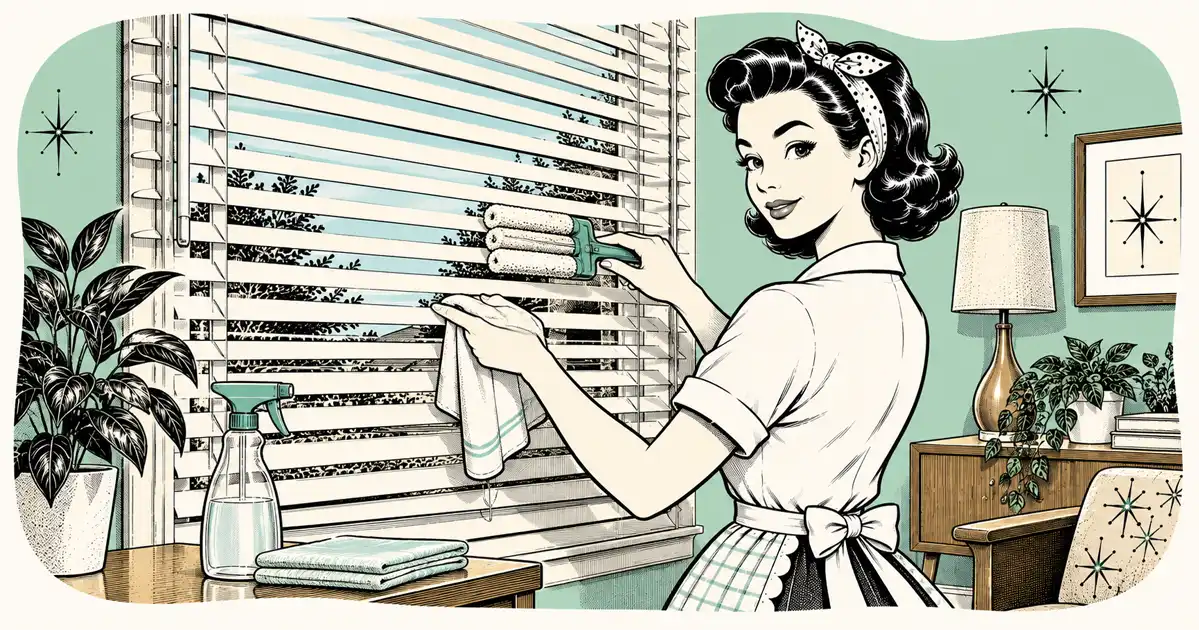
Blinds collect dust in a spot that’s easy to overlook, right up until sunlight shines across the slats and makes every speck visible. The trick is to clean them with a light touch. Press too hard, and a slat can bend or crease; use too much water, and some materials can stain or warp.
I recommend starting with dry dusting, then using a damp cloth only when the blind’s care instructions allow it. A few minutes of gentle cleaning can keep dust from building up without turning the job into a repair project.
Check the Blind Material First
Before you reach for a spray bottle, find out what your blinds are made of. Wood, faux wood, vinyl, aluminum, and fabric can each have different care needs. If you still have the manufacturer’s instructions, check them first. If not, look for a label or product information, and be cautious if you’re unsure.
Dry dusting is the safest starting point for many blinds. A slightly damp cloth may be suitable for some washable slats, but moisture can damage materials that aren’t meant to get wet. Real wood, for example, may be sensitive to water, while fabric blinds can hold onto moisture and develop marks. Don’t assume two sets of blinds that look alike can be cleaned the same way.
When the care guidance allows a damp wipe, use a cloth that’s lightly damp, not dripping. Skip soaking, steam, and harsh scrubbing. Avoid pulling on the slats or cords as you work. If there are motorized parts, keep moisture away from them and follow the manufacturer’s care instructions.
Quick Dusting Without Bending the Slats
For routine upkeep, dry dusting is usually the simplest method. You’ll need a clean microfiber cloth or a soft duster. A vacuum with a soft brush attachment can also help, as long as you use low suction and can control the nozzle gently.
- Lower the blinds. Let the slats hang in their usual position so they’re supported by the frame and cords.
- Close the slats. Turn them until they sit flat against one another. Don’t force the tilt control if it resists.
- Hold the slats steady. Rest a hand lightly near the middle of the blind, or support the section you’re cleaning. Keep your grip gentle.
- Dust one slat at a time. Starting at one end, move the cloth along the slat to the other end. Use light pressure rather than pinching or pressing down.
- Turn the slats the other way. Repeat the process on the opposite side to pick up the dust you couldn’t reach from the first position.
If you’re using a vacuum, keep the brush attachment parallel to the slats and let the bristles do the work. Don’t push the nozzle into the blind. When the cloth gets dusty, shake it out outside or switch to a clean section; otherwise, you may just be giving the dust a scenic tour of the window.
Work from the top of the blind downward so dust from higher slats doesn’t land on the part you’ve just cleaned. Move slowly around the headrail and cords. A soft brush or clean cloth can lift dust from those narrow spots without tugging at the hardware.
Careful Wipe-Down for Washable Blinds
If the material’s care guidance permits wet cleaning, a careful wipe-down can remove light grime that dry dusting leaves behind. First, dust the blind. Wiping a dusty surface with a wet cloth can turn loose particles into streaks, which is rarely an improvement.
Mix a small amount of mild cleaner with water only if the cleaner is suitable for the blind material. Dampen a soft cloth, then wring it out well. The cloth should feel barely damp, not wet enough to drip onto the sill or floor.
- Test an inconspicuous spot. Wipe a small area and check for color changes, marks, or damage. Let it dry before deciding whether to continue.
- Support each slat. Place one hand gently behind or beneath the section you’re cleaning. This keeps the slat from flexing as you wipe.
- Wipe with the other hand. Use light, even strokes along the slat. Don’t scrub back and forth or press hard on a stubborn spot.
- Dry as you go. Use a clean, dry cloth to remove moisture before moving to the next slat.
Refresh the cloth in clean water if it gets grimy, and wring it out again each time. If a mark doesn’t lift with a gentle pass, stop and check the care instructions instead of adding more pressure or cleaner. A blind slat isn’t a kitchen counter; it doesn’t benefit from a vigorous elbow workout.
For wide blinds, clean a small section at a time so you can support each slat comfortably. If the slats are very delicate, damaged, or hard to reach safely, don’t force the job. A light dusting may be a better choice until you can get appropriate care guidance.
Common Mistakes to Avoid
- Don’t press down or twist. Slats can bend when you push against them, especially if they’re thin or unsupported. Keep your hand steady and your touch light.
- Don’t spray cleaner directly onto the blinds. A spray can leave too much liquid in one place or send cleaner onto nearby fabric, flooring, or hardware. Put cleaner on the cloth instead, if the care instructions allow it.
- Don’t soak the slats. Excess water can leave marks or damage materials that aren’t designed for wet cleaning.
- Don’t use a rough sponge or abrasive pad. These can scratch or scuff some surfaces.
- Don’t wet-clean when the material guidance says not to. Stick with a dry cloth or soft duster unless you know the surface can handle moisture.
If a slat is already bent, avoid trying to straighten it by repeatedly flexing it. That can make the crease worse. Check the manufacturer’s guidance for repair or replacement options.
Make Blind Dusting a Small Habit
Blinds are easier to maintain when you dust them before a visible layer settles in. Add a quick pass to your regular room-cleaning routine, perhaps when you dust shelves or wipe the window sill. You don’t have to clean every window every time. Pick the rooms that collect the most dust and rotate through the rest.
A checklist can help keep small tasks from slipping off the radar. You can pair blind dusting with this weekly cleaning checklist and adjust it to fit your home.
With the right method for the material, a soft cloth, and a little patience, you can get blinds looking tidier without bending the slats. View the cleaning services and request an appointment online.