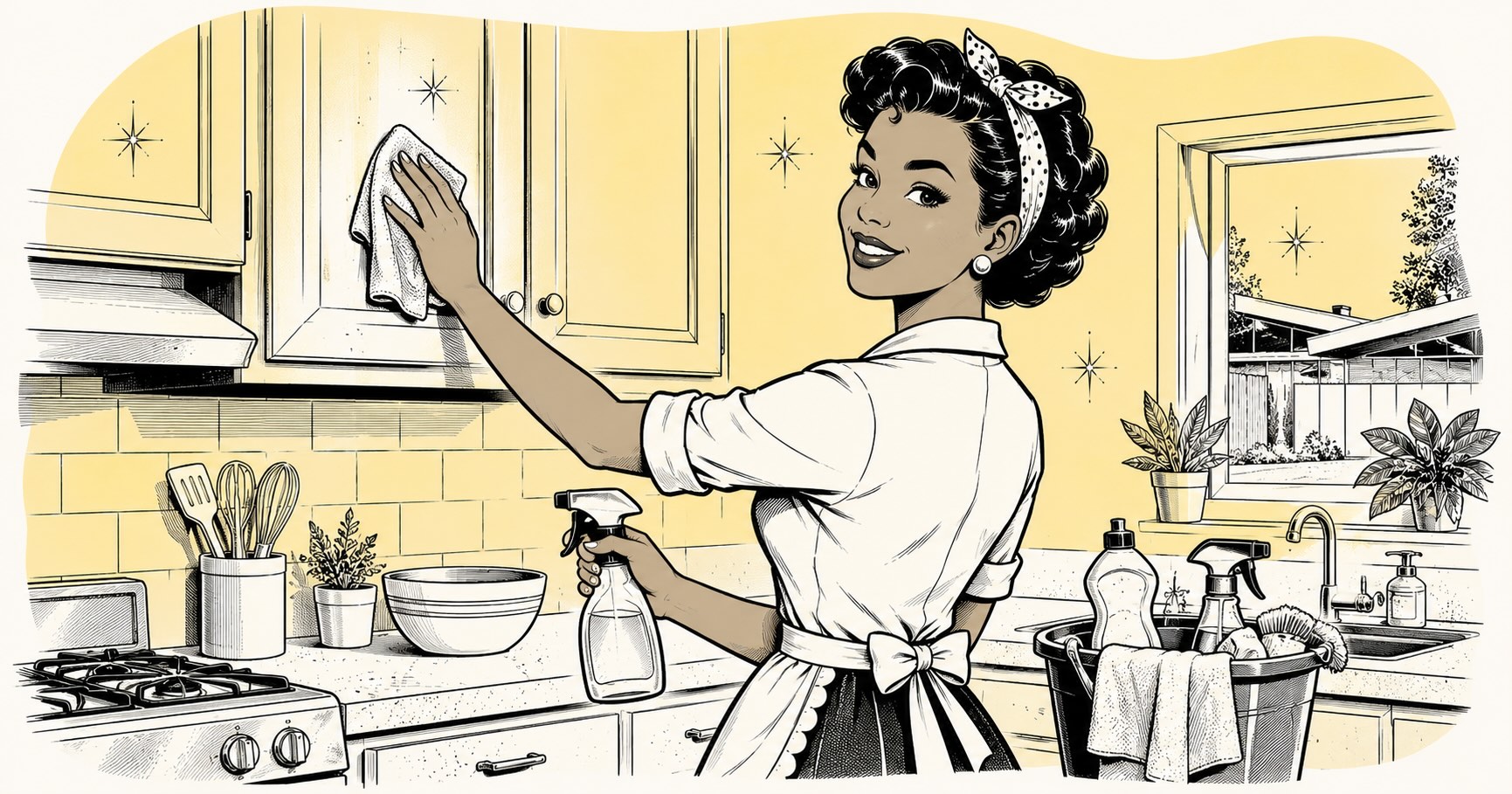
Kitchen cabinets take a beating. All that cooking, splashing, and sizzling means grease sneaks onto your cabinet fronts almost without you noticing, and then one day you run your hand along the door and think, "When did this get so sticky?" I see it in almost every kitchen I clean across the Bay Area, so trust me, you’re not alone. The good news is that grease comes off a lot easier than most people expect, as long as you’ve got the right approach.
Start With Dish Soap and Warm Water
My first go-to is plain dish soap mixed with warm water. Dish soap is literally formulated to cut grease, which is why it works so well here. Mix a few drops into a bowl of warm water, dip in a microfiber cloth, wring it out well so it’s damp rather than dripping, and wipe down the cabinet fronts. For light buildup, this is honestly all you need. Always wipe with the grain of the wood if your cabinets are wood-finished, and follow up with a dry cloth so you’re not leaving moisture behind.
Baking Soda Paste for Stubborn Spots
For the spots that dish soap can’t budge, baking soda is my secret weapon. Mix baking soda with just enough dish soap to form a thick paste, then apply it to the greasy area with your fingers or a soft cloth. Let it sit for a minute or two, then gently scrub in small circles. The mild abrasive action of the baking soda lifts that sticky, caked-on residue without scratching the finish. Wipe clean with a damp cloth and dry thoroughly. This combo works beautifully on the cabinet above the stove, which always gets the worst of it.
White Vinegar Spray for a Quick Refresh
White vinegar diluted with water makes a fantastic all-purpose degreaser for everyday maintenance. I mix equal parts white vinegar and warm water in a spray bottle, spritz the cabinet surface, let it sit for thirty seconds, and wipe it away. The smell fades quickly once it dries, I promise. One thing to keep in mind: avoid using straight vinegar on natural stone or unsealed wood, since the acidity can dull the finish over time. Diluted and used occasionally, though, it’s a great tool to keep in your cabinet-cleaning rotation.
Don’t Forget the Hardware
Cabinet handles and knobs collect grease too, and they’re easy to overlook. A toothbrush dipped in your dish soap solution works perfectly for getting into the little crevices around hardware. Give them a scrub, rinse with a damp cloth, and dry. It makes a noticeable difference in how clean the whole kitchen feels.
A Few Things to Avoid
Steel wool and abrasive scrubbers are a hard no on cabinet finishes. They scratch paint and laminate in ways you can’t undo. Same goes for harsh chemical sprays like oven cleaner, which are way too strong for cabinet surfaces. And always test any new cleaning solution on a hidden spot first, especially on painted or stained wood cabinets, just to make sure it plays nicely with the finish.
Keep Up With It Between Deep Cleans
The easiest grease to remove is grease you catch early. A quick wipe-down of your cabinet fronts once a week, especially around the stove, keeps buildup from ever getting out of hand. It takes two minutes and saves you a lot of scrubbing later.
If your kitchen cabinets are beyond the point of a quick DIY session, or you’d just rather spend your Saturday doing literally anything else, I’d love to help. Reach out to Arianna’s House Cleaning and let’s get your kitchen looking its best. You can book a cleaning right on our website or give us a call. We serve San Jose and the surrounding Bay Area, and we bring all the supplies.